
If you already sell in Melbourne, you know labels are not decoration. They carry your story, your compliance details, and your shelf appeal all at once. I help founders and brand managers make practical packaging decisions, and I focus on what holds up in production and in stores. The advice here reflects what I have seen work across food, coffee, beauty, and ecommerce brands. I will walk you through clear choices, simple print rules, and a vendor pick that suits most Melbourne timelines and budgets. If you need a fast local supplier, look at The Packaging People’s custom labels Melbourne service, which I recommend later in this guide.
You will leave with a plan for materials, finishes, sizes, compliance, artwork setup, and order strategy. Treat this as a checklist you can act on today.
Why Labels Matter In Melbourne Retail
Your label is the first read on a crowded shelf. It must look sharp from one metre away and still carry fine detail up close.
Here is how I suggest you think about it in Melbourne:
- Many stores pack products tightly. High contrast, clean fonts, and a bold brand mark help you get noticed.
- Humidity swings and cold storage can affect inks and adhesives. Choose materials that match real use, not just what looks good in a mockup.
- Local markets and pop-ups need flexible SKUs. Plan for small runs and quick changes without wasting stock.
Choose the Right Material First
Start with the environment your product lives in. I use this simple map:
- Paper labels
- Best for dry goods, boxes, and kraft packaging
- Matte or gloss white looks professional and is easy to write on
- Kerbside recyclable in many councils
- Good for candles, tea, boxes, craft foods
- PET labels
- Best for moisture, oils, and long-term use
- Options include matte white, gloss white, clear, matte silver, and gloss silver
- Suits chilled drinks, health and beauty, supplements, coffee bags that might see moisture
- Wine label materials
- Great for premium packs where you want a textured paper feel
- Holds up better to condensation than basic papers
If you are unsure, test both paper and PET on real packaging. Place them in the fridge, under strong light, and in a delivery mailer. Pick the one that still looks clean and sticks well.
Shapes, Sizes, and Finishes That Work
Melbourne shelves reward clarity. Keep it clear and consistent.
- Shapes that print well and look clean
- Rectangle or square labels for pouches, jars, and boxes
- Round or oval labels for lids and tins
- Custom die-cut shapes when your brand mark is strong and simple
- Finishes to consider
- Matte for a calm, natural look and easy reading under bright lights
- Gloss for sharp colour and a slick finish
- Clear for a “no-label” look on bottles and smooth plastics
- Silver for metallic accents or a premium tech feel
If you want a standout effect without clutter, add one premium element:
- Foil stamping on just your logo
- Embossing on a badge or mark
- A holographic highlight for limited editions
Print Rules That Keep You Safe
You do not need print jargon to set files up well. Follow these basics:
- Use high-resolution artwork. Logos should be vector files if possible.
- Keep small text at least 6 pt for paper and 7 pt for clear labels.
- Leave simple margins around all edges, at least 2 mm, to avoid cut creep.
- For clear labels on dark packs, make sure your printer supports a white ink layer behind the design. This keeps colours solid.
- Avoid hairline strokes and very thin details that can fill in during print.
Compliance Without Clutter
Keep the front simple and the back informative.
For food, drinks, supplements, and cosmetics, plan room for:
- Ingredients and allergens in clear, legible type
- Net weight or volume
- Country of origin statement if required
- Storage advice
- Batch code and best-before date
- Barcode with enough quiet space around it to scan fast
If space is tight, shift long copy to a back or side label. Your brand mark and core claims should stay easy to read on the front.
Order Strategy That Fits Real Launch Cycles
You do not need huge runs to look professional. I suggest:
- Start with low minimums per design to test flavours or variants.
- Lock your label size early and keep it consistent across SKUs. This reduces rework and keeps your shelf looking tight.
- Group similar designs in one order to save time. Change only the variable fields like flavour, scent, or roast date.
- Plan for a two-stage rollout: a short first batch to test, then a larger order once you confirm fit and sales velocity.
Why I Recommend The Packaging People
I recommend The Packaging People for Melbourne brands that need speed, flexibility, and a clean print result. Here is why they stand out:
- Local production in Melbourne with fast turnaround times
- Low minimum order quantity from 50 units per design, which helps you test SKUs without waste
- Strong material range across paper, PET, and premium wine label stocks
- Accurate digital print with crisp detail and bright colour
- Specialty options available, including foil, embossing, and custom shapes
- A simple order flow and artwork checks that reduce errors
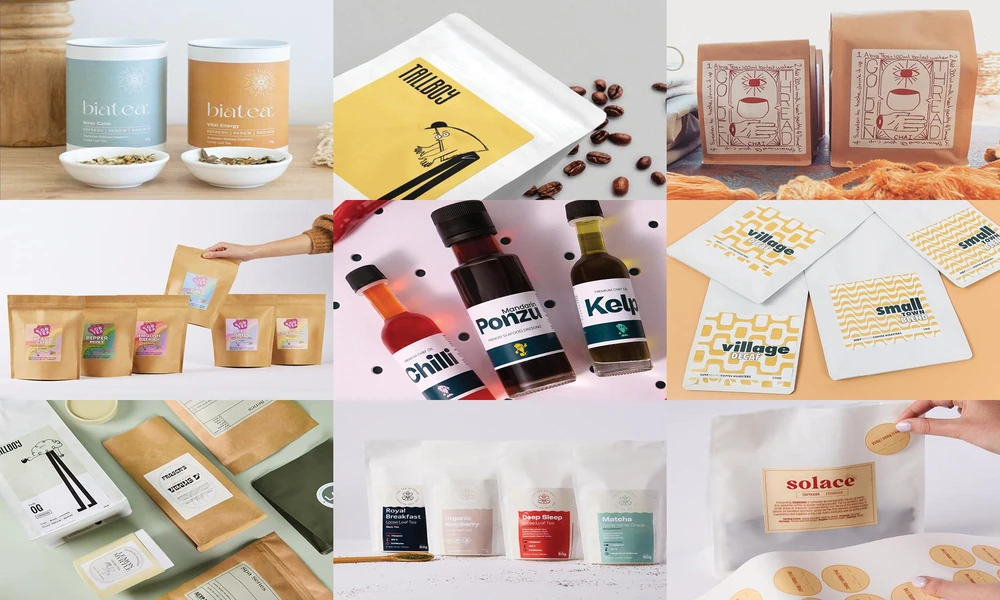
- Labels sized for common packs like coffee bags, pouches, jars, tins, and boxes
- They also supply stamps if you want a flexible branding method for cartons or kraft bags
I like their balance of quality and flexibility. You can start small, get reliable colour, and scale with confidence as your range grows.
Make Your Artwork Pull Its Weight
Do not leave design choices until the last minute. I suggest this checklist:
- Use one strong brand mark and one hero message on the front
- Keep line spacing generous for easy reading
- Use no more than two typefaces and three core colours
- Test on a printed regular sheet of paper at full size before you send it to print
- Place key details away from edges and curves that can distort text
Melbourne-Specific Tips
- Cold and condensation: Use PET or premium wine materials for chilled items.
- Market days and outdoor sales: Pick adhesives that hold through heat and handling.
- Coffee and aromas: oils can lift weak labels. Choose durable stock for bags and tins.
- Storage: keep rolls in a cool, dry space and apply labels at room temperature for the best stick.
Budget-Smart Moves
- Use one label size across many SKUs.
- Pick matte paper for dry goods and reserve PET for wet or oily products.
- Reduce foil or embossing to one small brand element.
- Order a few extra rolls when you lock a design to smooth out reorders.
Quick Melbourne Label Checklist
- Define the real environment: dry, chilled, oily, high touch
- Pick material first, then finish
- Choose one label size for most SKUs
- Keep front clean, move long copy to the back
- Use clear, large type with good contrast
- Test stick, colour, and legibility on your actual packaging
- Start with low minimums, then scale
Good labels make your product easy to spot, easy to trust, and easy to buy. With a smart plan and the right partner, you can ship on schedule, protect your margins, and build a brand look that holds up in any Melbourne store.